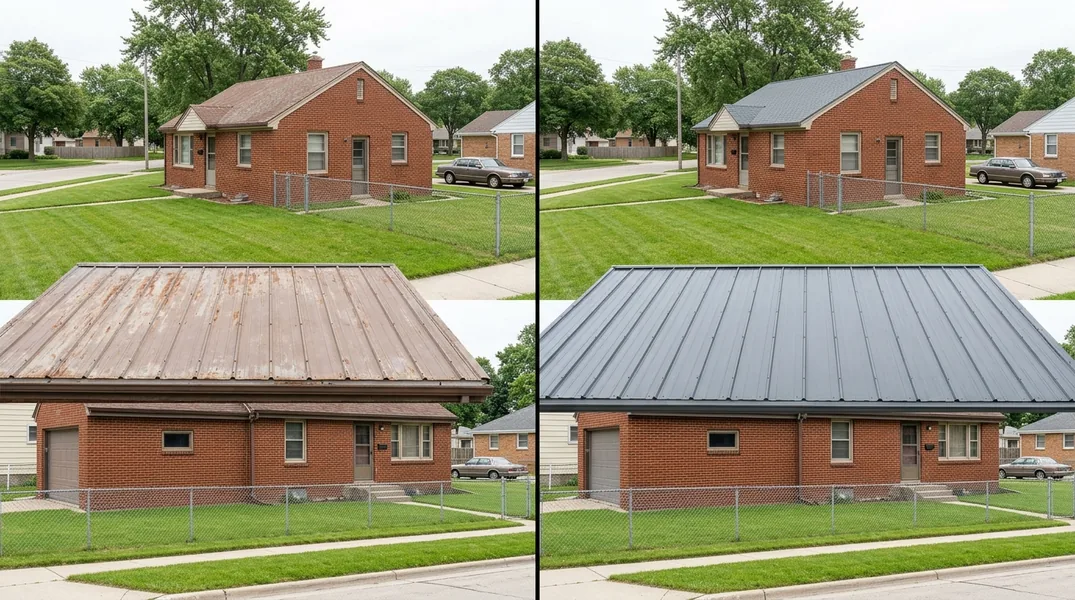
Why Milwaukee Winters Are Tough on Any Roof
If you live in Milwaukee, you already know that winter here is not a gentle affair. Lake-effect snow, repeated freeze-thaw cycles, and the occasional heavy, wet snowfall can dump inches on your roof in a matter of hours. That combination puts enormous stress on roofing materials, and it is exactly why homeowners need to think carefully about how their roof will perform when the snow starts piling up.
Traditional asphalt shingles can struggle under these conditions. Snow and ice can work their way under shingle edges, and the freeze-thaw cycle often leads to ice dams that force water back into the home. Metal roofs, particularly standing seam systems, offer a different approach. But even the best metal roof needs the right accessories and installation details to manage heavy snow safely. That is where snow guards and proper standing seam design come into play.
Understanding Metal Roof Snow Load in Wisconsin
Snow load refers to the weight of snow and ice that accumulates on your roof. In Wisconsin, building codes require roofs to support a specific snow load based on your region, and Milwaukee sits in an area where that load can be significant. A metal roof itself is lightweight, but the snow sitting on top of it still needs to be accounted for. The good news is that metal roofing is engineered to handle these loads when it is installed correctly by a qualified contractor.
What matters most is the combination of panel gauge, fastener spacing, and the structural condition of your roof deck and framing. A Metal Roof Installation performed by an experienced crew will take local snow load requirements into account from the start. If you are replacing an older roof, a Metal Roof Replacement is also the right time to verify that your home's structure can support the load and that the new system is specified for our climate.
How Standing Seam Snow Shedding Works
One of the biggest advantages of Standing Seam Metal Roofing is its smooth, low-friction surface. Snow tends to slide off rather than cling to the panels, which reduces the amount of snow that accumulates over time. The raised seams also create channels that help guide melting snow and water down the roof in a controlled way. This shedding behavior is a major reason metal roofs are so effective at preventing ice dams.
However, snow shedding is a double-edged sword. When a large sheet of snow releases suddenly, it can land on walkways, driveways, landscaping, or even people below. That is why standing seam snow management is not just about letting snow slide; it is about controlling when and where it falls. A properly designed system balances shedding with safety, and that is where snow guards enter the picture.
The Role of Snow Guards on a Metal Roof
Snow guards are small brackets or bars attached to the roof that break up snow into smaller pieces and slow its release. On a metal roof, snow guards are especially important over entryways, sidewalks, driveways, and areas where landscaping or equipment could be damaged. They do not stop snow from shedding entirely; instead, they encourage it to come down gradually and in smaller amounts, which is much safer for the people and property below.
There are several types of snow guards, from individual pad-style guards to continuous bar systems, and the right choice depends on your roof pitch, panel profile, and where snow tends to release. For homeowners in Wauwatosa and nearby communities, a professional assessment can determine the best placement and quantity. Installing snow guards correctly requires attaching them to the standing seam without compromising the roof's weathertightness, so this is not a do-it-yourself project for most homeowners.
Metal Roof Ice Dams: Why They Are Less Likely
Ice dams form when heat escapes from the home, melts snow on the upper roof, and the water refreezes at the colder eaves. That ice buildup can block drainage and force water under the roofing material, leading to leaks and interior damage. Metal roofs help reduce ice dam risk because they shed snow more readily and because the smooth surface gives water fewer places to pool and refreeze. A well-insulated attic and proper ventilation remain essential, but the roofing material itself plays a big role.
Standing seam panels also have fewer seams where water can infiltrate compared to shingles, and the raised seams create a natural path for meltwater to drain. When combined with snow guards and correct flashing details, a metal roof is one of the most ice-dam-resistant options available for a Wisconsin winter. If you have struggled with ice dams in the past, a Metal Roof Over Shingles (Retrofit) may be a practical way to upgrade without a full tear-off, though your contractor will need to confirm that your existing roof structure is suitable.
Metal Roof Installation Near Me: When to Call a Pro
If you are researching metal roofing in West Allis or anywhere in the greater Milwaukee area, you have probably seen plenty of opinions online about snow guards and roof pitch. The truth is that every home is different, and the right snow management plan depends on your roof's geometry, your landscaping, and how you use the spaces below. A local contractor who installs metal roofs through Wisconsin winters can spot the risks that a generic guide will miss.
Before you commit to a system, ask for a written assessment that covers panel type, snow guard placement, and how the roof will handle snow load. You can also request a free estimate to get a clear picture of what your project involves. If you want to understand ballpark figures first, review the company's pricing page, then call Milwaukee Metal Roofing at (414) 219-0818 to talk through your options. A little planning now can mean a safer, drier winter for years to come.
Looking for a professional metal roofing contractor in Milwaukee? Milwaukee Metal Roofing responds fast for all your metal roofing needs.
Get a Free QuoteOur services: Metal Roof Installation · Standing Seam Metal Roofing · Metal Roof Replacement